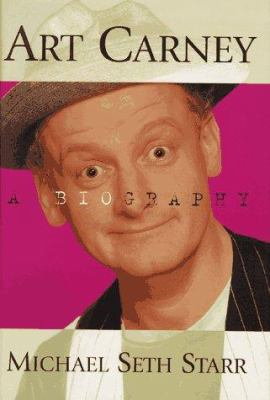
I read a book this weekend that got me thinking about spin-offs. Particularly, those spin-offs which take a beloved character from a popular sitcom and plant that character in a new place and situation. The book I read was “Art Carney: A Biography” by Michael Starr.
I’m saving Art Carney, and his legendary characterization of Ed Norton, for the end. Believe me, the Carney story is an absolute stunner. Be patient.
Here is my rundown of Spin-Offs: The Good, The Bad and The Ugly, with three examples of each category.
THE GOOD:
“Frasier” finds Dr. Crane setting up shop as a radio talk show counselor in Seattle. The Crane family tree expands to include his father Martin and brother Niles. The series benefits from stellar writing, a unique set of supporting characters and a penchant for farce:
“Benson” as played by Robert Guillaume on “Soap” was a butler. When he got his own show, he became head of household for a somewhat doltish governor.
“Gomer Pyle USMC” took Mayberry gas station attendant Gomer to Marine boot camp, where he faced the perpetually enraged Sargeant Carter. It’s not my cup of tea sitcom-wise, but it was a huge hit for CBS. “Gomer” cast members Jim Nabors, Ronnie Schell and Frank Sutton did a sort of spin-off-spin-off with “The Jim Nabors Hour”
THE BAD:
“Flo”. What happens when gum-smacking, wise-cracking waitress Flo moves to Texas and starts up her own honky tonk bar? Well, not so much, actually. This spin-off from “Alice” had one short season and a full second season of 20-some episodes before fading into oblivion.
“Rhoda” finds Mary Richards’ pal returning to her home turf. “New York…this is your last chance!” This series is notorious for getting huge promotion and ratings for the wedding episode, then realizing that Rhoda’s character is based on her single status. Rhoda and Joe broke up, and things just sort of quietly died from there.
“Enos”. You remember him, right? The dimwitted deputy on “The Dukes of Hazzard”? You…don’t remember him? Well, anyway, he got his own show. And he joined the Los Angeles Police Department. He was teamed with a street-smart black partner. The show ran from November to May. My conspiracy theory is that the show was created for one reason: To allow Mad Magazine to publish a parody caled “Anus.”
THE UGLY:
“Phyllis”. Another MTM spin-off, with Cloris Leachman playing one of the most unlikeable sitcom characters in TV history. Even the opening credits face up to it:
But the real reason this one goes on the “ugly” category is a series of unfortunate incidents. Wikipedia sez:
Phyllis takes a job as an assistant in a photographic studio. The owner, Julie Erskine, was played by Barbara Colby. However, after three episodes of Phyllis had been filmed, Colby was murdered and the part was assumed by Liz Torres
In a December 1976 episode, Jonathan’s cranky and outspoken Mother Dexter (Lowry), Phyllis’ main nemesis, married Arthur Lanson (Burt Mustin); both Lowry, 86, and Mustin, 92, died within a month of the episode’s airing. (Episodes featuring Lowry continued to air through early February 1977; Mustin’s character was mentioned but not seen after the wedding episode.).
Yeesh.
:Joey”. My oh my, was that “Friends” a popular show! Everybody loved it! It was “Friendsmania” throughout the world! So surely, people would want to see more of these characters after the series ended? Amirite?
Well, it all has to do with which Friend they could finagle into doing a spin-off. They got Joey. Joey got two seasons.
The pilot was watched by 18.6 million American viewers,[9] but ratings continually decreased throughout the series, averaging 10.2 million viewers in the first season and 7.1 million in the second.[10] The show was pulled from its Thursday-night timeslot in December 2005 and NBC returned it in a new timeslot (Tuesdays at 8pm) on March 7, 2006. Due in part to being in competition with American Idol, Joey was the lowest-rated prime time program of the week for NBC.[11] The network pulled the series after the first Tuesday broadcast; the remaining episodes have never been broadcast by NBC but were shown on various other networks around the world. The final broadcast episode, on March 7, 2006, was watched by 4.1 million viewers; NBC canceled the series on May 15, 2006, after two seasons.[12] [Co-creator Kevin] Bright blamed the collaboration between NBC executives, the studio, and other producers for quickly ruining the series:[10]
On Friends, Joey was a womanizer, but we enjoyed his exploits. He was a solid friend, a guy you knew you could count on. Joey was deconstructed to be a guy who couldn’t get a job, couldn’t ask a girl out. He became a pathetic, mopey character. I felt he was moving in the wrong direction, but I was not heard.
Alas, poor Joey.
Okay, here is the grand finale, referring to the book I mentioned at the top of this post, “Art Carney: A Biography” by Michael Starr. The book was really quite sad and shocking. Art Carney, beloved for his brilliant characterization of Ed Norton on “The Jackie Gleason Show” and “The Honeymooners” fought a nearly lifelong battle with addiction to alcohol and drugs. Carney was at one of his lowest points in 1966 when Jackie Gleason decided to bring back the Honeymooners characters on his weekly variety show. Gleason brought Carney to Miami (“the sun and fun capital of the world!”) and the two comedic legends brought Ralph Kramden and Ed Norton back to life.
At the end of the 1960’s Gleason was showing less interest in his weekly series, but he and his production company wanted to wring a few more bucks out of the show. Here is an excerpt from Starr’s book, which I highly recommend:
One of the more telling episodes in Carney’s story is the short-lived attempt to spin Ed Norton off into his own series during the Miami Gleason years. CBS, Gleason and his writers thought there might be more to do with Norton beyond the Kramden apartment. They shot a pilot in the Miami Auditorium, produced by Gleason’s company and written by his regular writing staff, with Al Lewis, Phil Leeds and Ron Carey in support. On paper, it should have worked. In practice, it was a disaster.
“Art was drunk during the filming of this pilot,” points out Starr. “He was dropping the script and blowing his lines, and it was one of the few times he sort of let his guard down.” Phil Leeds, who co-starred, was blunt with Starr: Carney “f**ked it up… He was a brilliant talent, couldn’t remember his lines, didn’t know if it was the booze or the pills,” and Leeds didn’t think Carney had enough confidence in himself to carry a show.
They tried to work around it. At one point, Starr says, Carey’s character came in with a clipboard so Norton could read off it, but the “clipboard” was just loaded with Carney’s dialogue so he wouldn’t forget. The audience sensed something was wrong. “People thought they were in an insane asylum,” Starr recalls someone telling him. “Nobody was laughing. It was like a giant mural with people painted in their seats.”
Looking back, he believes that more than addiction, it was psychology. “I do think that,” he says when asked if Carney sabotaged his own chance. “He didn’t want to be the star of the show, but he went along with the plan to do the spinoff for CBS. Drinking heavily during the shooting of that pilot — if you want to look at it from a psychological angle, then, yes, self-sabotage. Ruining it, but probably deep down glad that he did, because then he didn’t have to carry a show by himself.”
It’s extremely unsettling. Picturing that enormous 7,000-seat auditorium filled with tourists thrilled to see one of their favorite TV stars….only to see…well, a breakdown.
It’s important to note that Art Carney did indeed beat his batttle with substance abuse. He also continued to play his most beloved role in a series of Honeymooners reunion specials throughout the 1970’s. And most incredible of all, Art Carney won a Best Actor Academy Award for “Harry and Tonto”, in a year with incredible competition: Albert Finney, Dustin Hoffman, Jack Nicholson and Al Pacino.
It seems unfair to do all this writing about Art Carney and not share some classic Ed Norton.